
Software Development Life Cycle (SDLC) Explained | Complete Guide 2026
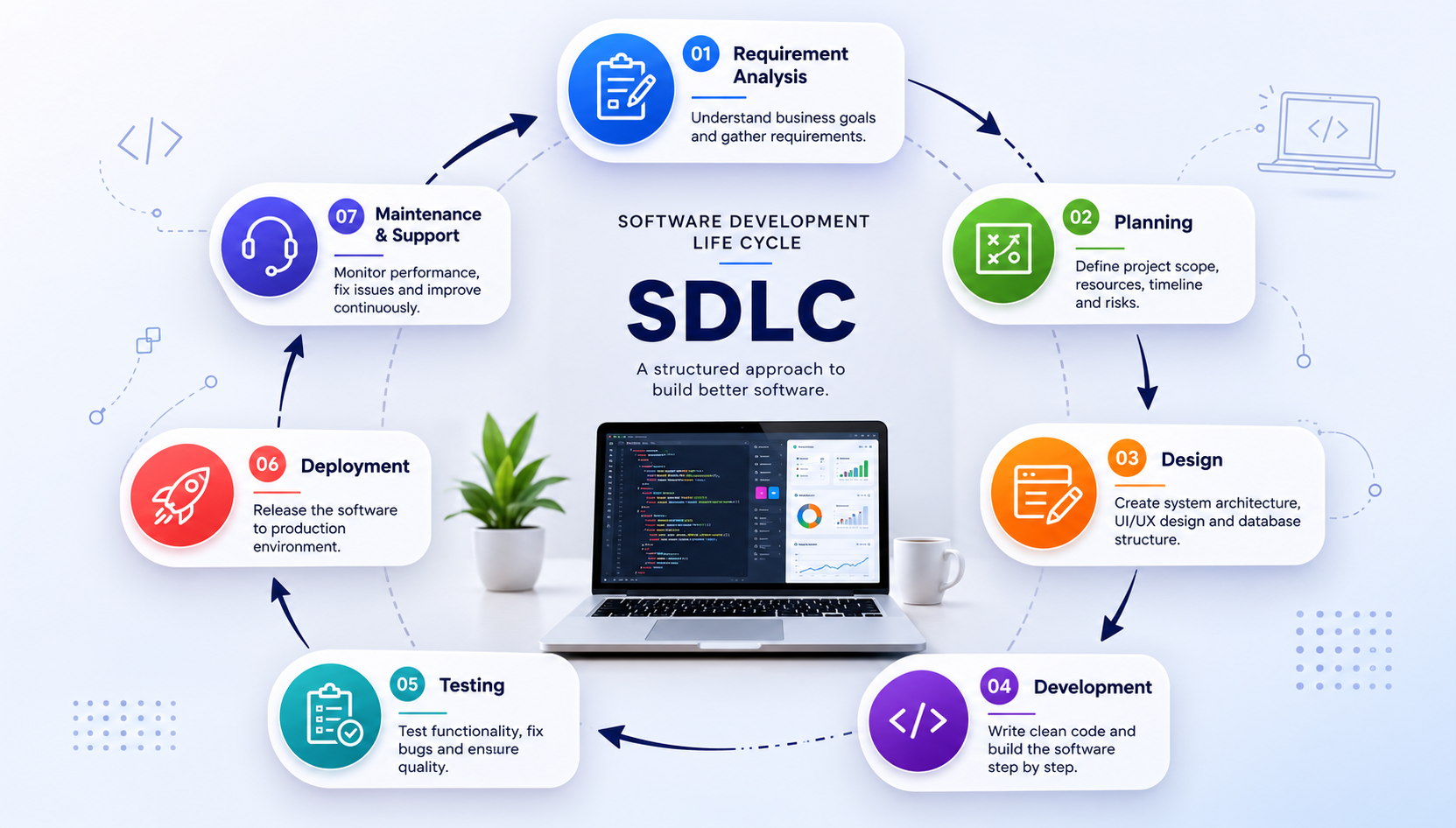
Software Development Life Cycle (SDLC) Explained
Developing high-quality software requires more than writing code. Successful software projects follow a structured process that ensures every stage—from planning to deploymen is completed efficiently and meets business requirements. This structured approach is known as the Software Development Life Cycle (SDLC).
What is the Software Development Life Cycle (SDLC)?
The Software Development Life Cycle (SDLC) is a systematic process used to design, develop, test, deploy, and maintain software applications. It defines a sequence of phases that guide development teams from the initial idea to the final product and ongoing maintenance.
The primary objective of SDLC is to build software that meets business goals, satisfies user requirements, and delivers a high-quality user experience.
Why is SDLC Important?
A well-defined SDLC helps organizations manage software projects efficiently by:
- Improving project planning and management
- Reducing development risks
- Enhancing software quality
- Controlling project costs
- Increasing team collaboration
- Delivering projects on schedule
- Simplifying future maintenance and updates
Following an SDLC framework ensures that every stage of development is carefully planned and executed.
The 7 Phases of the Software Development Life Cycle
1. Requirement Gathering and Analysis
- Business goals
- Functional requirements
- Technical requirements
- User expectations
- Budget and timeline
- Potential challenges
2. Planning
- Project scope
- Resource allocation
- Development timeline
- Budget estimation
- Risk assessment
- Technology selection
Proper planning helps avoid delays and keeps the project on track.
3. Design
- System architecture
- Database design
- UI/UX design
- API planning
- Security considerations
Creating a detailed design helps developers build software efficiently while ensuring a seamless user experience.
4. Development
- Frontend development
- Backend development
- Database implementation
- API integration
- Third-party service integration
Teams often use Agile methodologies to deliver features in smaller iterations, allowing for continuous feedback and improvements.
5. Testing
- Functional testing
- Performance testing
- Security testing
- Integration testing
- User acceptance testing (UAT)
- Bug fixing
Comprehensive testing improves reliability and minimizes issues after deployment.
6. Deployment
- Cloud deployment
- Server configuration
- Database migration
- Performance monitoring
- User onboarding
7. Maintenance and Support
- Bug fixes
- Security updates
- Performance optimization
- Feature enhancements
- Technical support
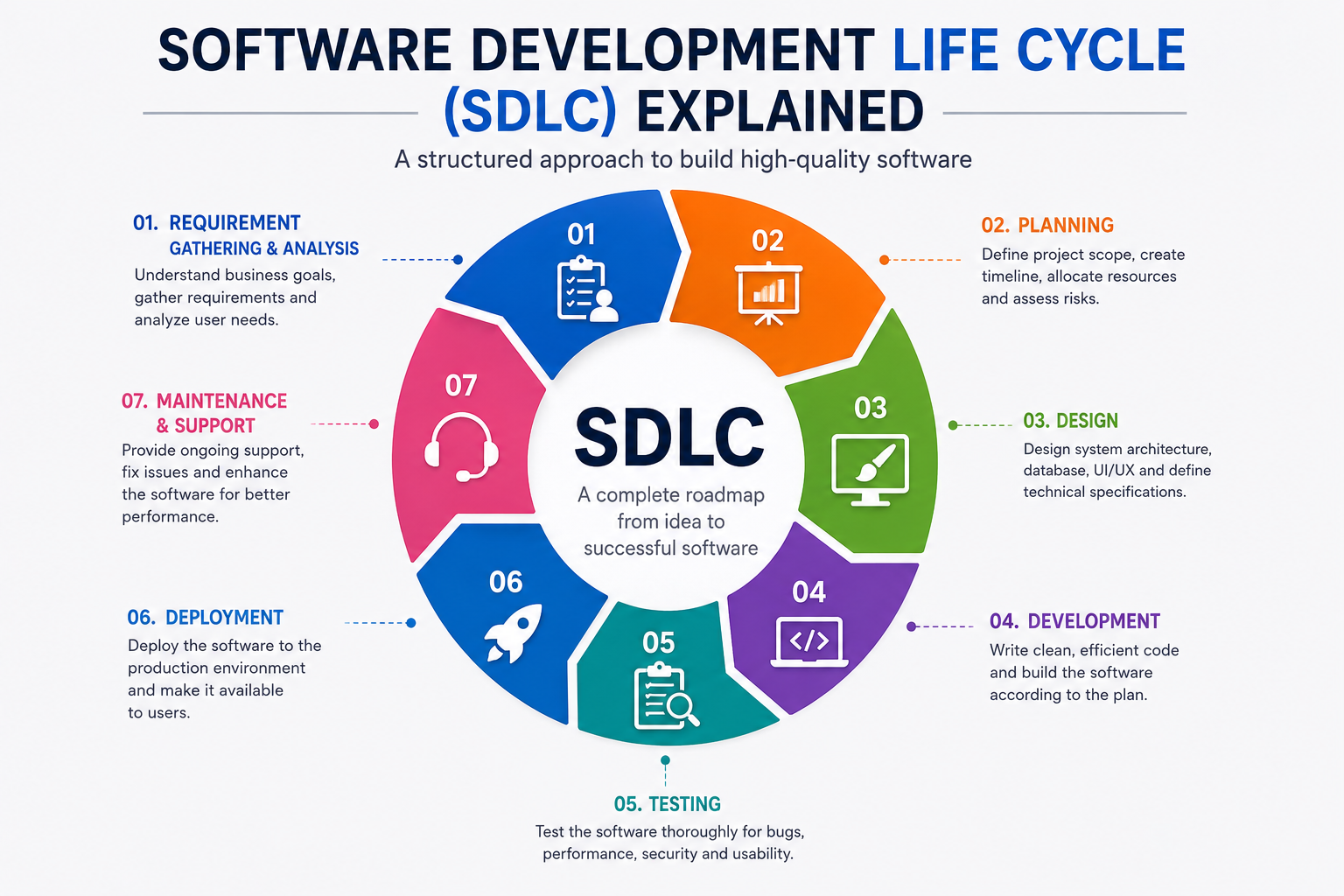
Benefits of Following SDLC
Organizations that implement a structured SDLC enjoy several advantages:
- Higher software quality
- Better project visibility
- Reduced development risks
- Faster delivery
- Improved communication
- Efficient resource utilization
- Easier maintenance
- Greater customer satisfaction
These benefits help businesses deliver successful software projects while optimizing costs and timelines.
Best Practices for an Effective SDLC
To maximize the success of software projects, organizations should:
- Clearly define project requirements.
- Choose the right SDLC model.
- Involve stakeholders throughout development.
- Prioritize security from the beginning.
- Perform regular testing.
- Maintain clear documentation.
- Continuously gather user feedback.
- Plan for long-term maintenance and scalability.
Following these practices helps ensure smooth project execution and high-quality outcomes.
Conclusion
At Pure Technology, we follow industry-leading SDLC practices combined with Agile methodologies to develop secure, scalable, and high-performance software solutions. From planning and UI/UX design to development, testing, deployment, and ongoing support, our team helps businesses transform ideas into innovative digital products.