
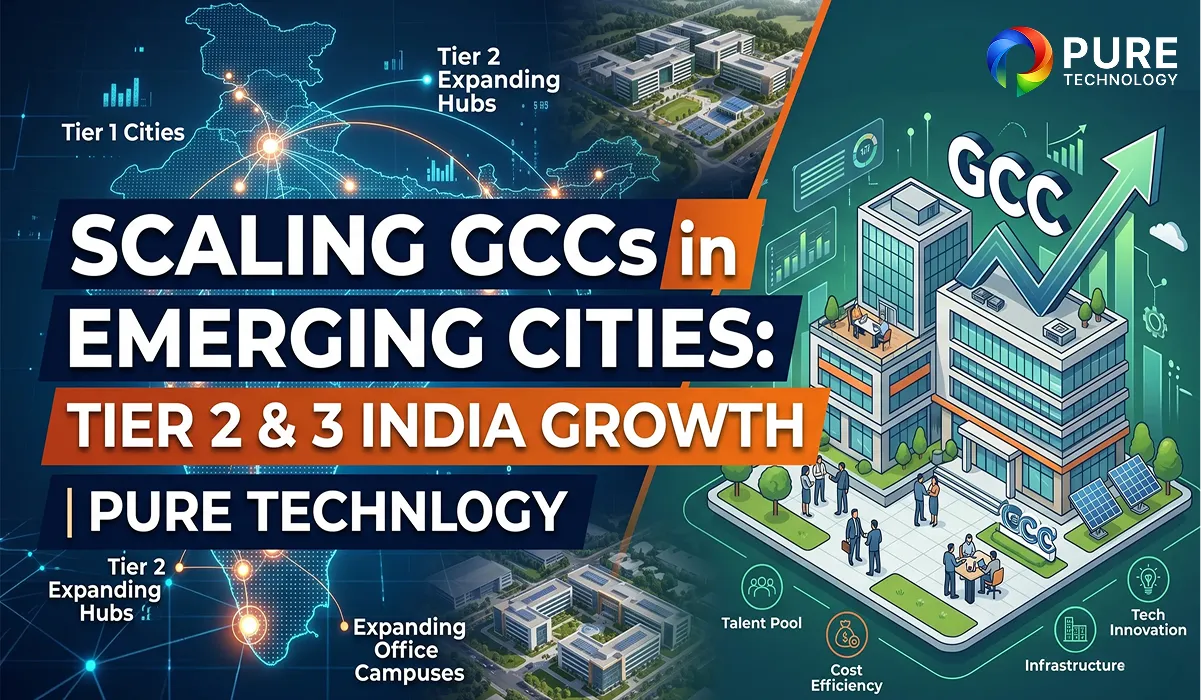
India’s Global Capability Centers (GCCs) are undergoing a major transformation. While metro cities like Bengaluru, Hyderabad, Delhi NCR, and Mumbai have traditionally been the backbone of GCC expansion, a strong new trend is emerging—Tier-2 and Tier-3 cities are now becoming the next strategic hubs for global enterprises.
This shift is not just about reducing costs. It reflects a smarter, future-ready approach where organizations are diversifying their talent sources, de-risking operations, and unlocking new growth corridors across India.
As global companies increasingly seek resilience, scalability, and innovation, emerging Indian cities are proving to be ideal destinations for building and expanding GCC operations.
Why GCC Expansion is Moving Beyond Tier-1 Cities
Tier-1 cities have long offered world-class infrastructure, mature ecosystems, and large talent pools. However, rising real estate costs, salary inflation, high attrition rates, and increasing competition have created operational challenges for enterprises trying to scale.
This is where Tier-2 and Tier-3 cities offer a strong advantage. These cities provide the right balance of affordability, accessibility, and growing talent availability.
According to industry trends, the share of GCCs in Tier-2 and Tier-3 cities has risen from 5% in 2019 to 7% in 2024, and the momentum continues to grow as more enterprises build long-term strategies around these regions.
Key Reasons to Expand GCCs into Tier-2 and Tier-3 Cities
GCC expansion in emerging cities is driven by several compelling advantages, including:
- Lower operational and real estate costs
- Competitive salary structures
- Access to an underutilized talent pool
- Reduced hiring competition
- Supportive government initiatives and incentives
- Strong potential for long-term scalability
This expansion is increasingly becoming a deliberate strategy rather than an alternative option. Enterprises are now viewing Tier-2 and Tier-3 cities as essential components of their global operating model.
Benefits of Scaling GCCs in Emerging Cities
1. Talent Insights: The Biggest Magnet for GCC Growth
One of the strongest drivers of GCC expansion in emerging cities is the availability of talent. Nearly 60% of India’s technology graduates come from Tier-2 and Tier-3 cities, making these regions an untapped powerhouse of skilled professionals.
Access to a Larger Talent Pool
Tier-2 and Tier-3 cities are rapidly producing engineering and technology graduates who are eager to work closer to their hometowns. Expanding GCCs into these regions allows companies to access a workforce that is not only capable but also more stable and loyal.
Additionally, with India’s increasing focus on global talent development through the National Framework for GCCs, multinational companies are being encouraged to build stronger and more diverse professional ecosystems across the country.
Reduced Competition for Skilled Talent
Unlike metro cities where talent demand is extremely high and retention is challenging, emerging cities offer significantly lower competition. This helps enterprises hire more efficiently and build long-term teams with reduced attrition.
Skilled Professionals Supported by Local Academia
India’s educational infrastructure is strong across multiple smaller cities. Many Tier-2 and Tier-3 locations have a high density of colleges offering engineering, management, and IT programs.
This creates a powerful ecosystem where academia and industry can work together to create job-ready professionals. When combined with targeted upskilling programs, this workforce becomes increasingly adaptable to global standards and future technologies.
2. Infrastructure Insights: Tier-2 Cities Are Rapidly Modernizing
GCC expansion is not only benefiting from infrastructure growth in these cities—it is also accelerating it. As more global organizations invest in these regions, the local ecosystem continues to evolve.
Growing IT Ecosystem
Tier-2 and Tier-3 cities are witnessing the rapid development of technology parks, innovation hubs, incubators, and co-working ecosystems. Both public and private investments are enabling these regions to become sustainable environments for global operations.
Cities such as Ahmedabad, Bhubaneswar, Coimbatore, and Kochi are already emerging as strong contenders for technology-driven GCC operations.
Robust Physical and Digital Infrastructure
Improved transportation, stronger connectivity, modern commercial spaces, and reliable internet access are making these cities highly viable for large-scale GCC operations.
Central and state governments are also investing in urban development, ensuring these locations can support long-term growth for enterprises.
Smart City Initiatives Supporting GCC Expansion
The Government of India’s Smart City Mission has played a major role in transforming smaller cities. By enhancing digital governance, improving urban infrastructure, and modernizing public services, the initiative has directly supported the needs of global enterprises and their workforce.
Challenges in Scaling GCCs in Tier-2 and Tier-3 Cities
While the advantages are significant, GCC expansion in emerging cities also comes with challenges that require proactive planning.
Some common barriers include:
- Infrastructure gaps in select regions
- Shortages in specialized skills
- Regulatory and compliance complexities
- Workplace cultural integration issues
However, these challenges are increasingly being addressed through structured investment, government policies, and enterprise-driven capability building.
How to Overcome GCC Expansion Challenges
Infrastructure Gaps
While many Tier-2 cities have improved significantly, infrastructure maturity can vary across locations. Enterprises must evaluate connectivity, office readiness, and ecosystem maturity before finalizing a site.
Partnering with local developers and consulting firms helps reduce uncertainty and ensures faster setup.
Talent and Skill Gaps
Although Tier-2 and Tier-3 cities offer large talent pools, niche skill availability in areas such as AI, cybersecurity, cloud architecture, and advanced analytics may still be limited.
GCCs can bridge this gap through:
- Structured upskilling programs
- Corporate training academies
- Partnerships with universities and institutions
- Hiring experienced Tier-1 professionals for leadership and mentoring roles
Regulatory Complexities
State-specific compliance requirements, tax structures, and incentive frameworks can be difficult to navigate without regional expertise.
To ensure smooth execution, companies should work with:
- Local consultants
- Legal advisors
- Government liaison partners
This approach improves compliance efficiency and ensures enterprises maximize available incentives.
Cultural Integration and Workforce Alignment
Building a unified corporate culture while respecting local work practices requires a thoughtful onboarding strategy.
Enterprises can ensure stronger integration through:
- Cultural sensitivity training
- Leadership development programs
- Inclusive workplace policies
- Structured engagement and retention initiatives
Government Support Accelerating GCC Expansion
Government initiatives are actively supporting the growth of GCCs across India. The National Framework for GCCs and multiple state-level incentives are helping enterprises by:
- Improving infrastructure readiness
- Reforming building bylaws
- Supporting industry-academia partnerships
- Encouraging private investments in technology hubs
- Enhancing ease of doing business
This strong policy support is reducing barriers and enabling GCCs to scale faster in emerging regions.
Top Tier-2 and Tier-3 Cities Becoming GCC Magnets
Selecting the right city is one of the most critical decisions for scaling GCCs. Key factors include government support, infrastructure availability, talent readiness, and long-term ecosystem growth.
Some preferred cities for GCC expansion include:
- Pune
- Chennai
- Jaipur
- Coimbatore
- Kochi
- Chandigarh
- Visakhapatnam
These locations are rapidly becoming innovation centers for high-value functions such as:
- Product development
- AI and data engineering
- Cybersecurity operations
- Finance and analytics
- Customer experience and support transformation
Several global organizations have already begun establishing strong operations in these regions. For example, Guidehouse has its GCC in Chennai’s Ramanujan IT City, and Hyster-Yale Group has set up its GCC in Pune focusing on engineering, supply chain, and marketing initiatives.
The Future of GCC Growth in India
Tier-2 and Tier-3 cities are no longer secondary choices. They are becoming strategic growth hubs for global organizations seeking resilience, cost efficiency, and long-term talent sustainability.
With the combined advantages of workforce availability, expanding IT ecosystems, and government-backed infrastructure improvements, these emerging cities are poised to become the next big drivers of India’s global capability revolution.
Enterprises that invest early in these locations will gain a strong competitive edge in innovation, scalability, and workforce stability.
How Pure Technology Can Help You Scale Your GCC
Scaling a GCC is not only about selecting a city—it requires deep planning across real estate, workforce strategy, compliance, operational setup, and long-term scalability.
At Pure Technology, we help global enterprises build, optimize, and scale GCC operations across India’s emerging cities. From identifying the right location to supporting talent acquisition and infrastructure planning, our expertise ensures that your GCC expansion journey is smooth, cost-efficient, and future-ready.
Ready to scale your GCC in India’s emerging cities?
Contact Pure Technology today to explore the best GCC expansion strategy for your business.
FAQs
1. Why are Tier-2 and Tier-3 cities becoming popular for GCC expansion?
Because they offer lower costs, reduced competition, a growing skilled workforce, and strong government support for infrastructure and business development.
2. What are the key benefits of scaling GCCs in emerging cities?
Major benefits include cost advantage, access to a wider talent pool, better retention, improved infrastructure growth, and government incentives.
3. What are the main challenges in expanding GCCs outside metro cities?
Infrastructure gaps, shortage of niche skills, regulatory complexities, and cultural integration challenges are common obstacles.
4. Which Tier-2 cities are best for setting up GCCs in India?
Popular Tier-2 GCC destinations include Pune, Chennai, Jaipur, Coimbatore, Kochi, Chandigarh, and Visakhapatnam.
5. How can companies reduce risks while expanding GCCs into smaller cities?
By conducting detailed feasibility studies, partnering with local consultants, investing in upskilling programs, and leveraging government incentives.
Pure Technology | Building Future-Ready GCCs Across India